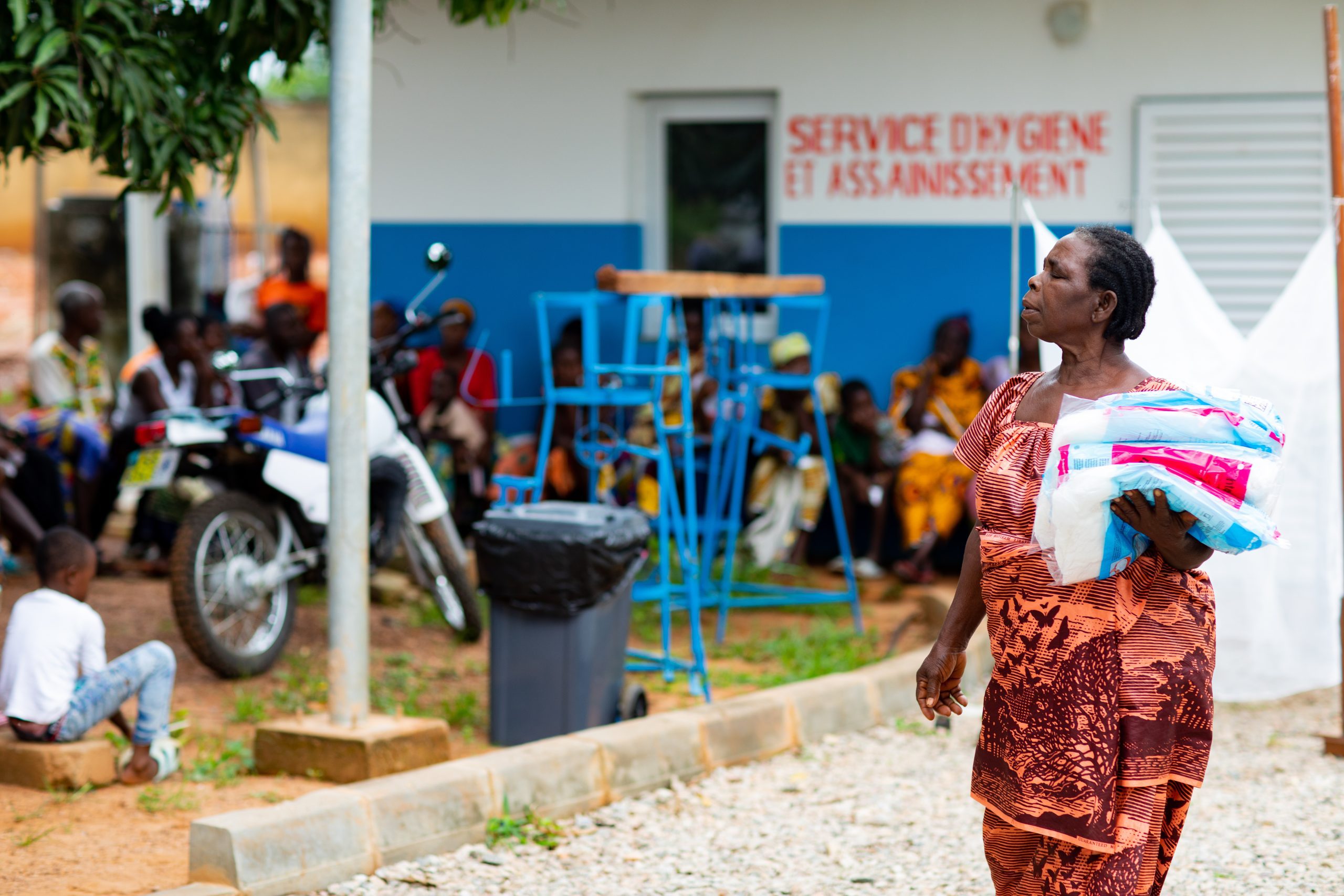
In Madagascar’s most remote areas, monitoring the nutritional status of mothers and children means traveling to meet them, village by village. Action Against Hunger (ACF) has been doing this work for years. To move from fragmented collection tools to reliable longitudinal monitoring available offline, the organization turned to DHIS2, with Bluesquare as a technical support partner.
ACF Madagascar collects nutritional monitoring data for mothers and children in hard-to-reach areas with limited connectivity. Data collection mainly covers 3 programs: acute malnutrition management (PECMA), integrated management of childhood illness (PCIME), and medico-socio-psychological monitoring (SMSP).
In practice, a regional ACF team travels to the villages within a given geographic area. Mothers and children are brought together, interviewed, and tested. Children identified with acute malnutrition are enrolled in DHIS2 to begin their monitoring; those identified during a previous visit are followed up using data already collected. Depending on their needs, mothers and children are cared for under one or more of these programs. The most severe cases are referred to Intensive Nutritional Recovery and Education Centers (CRENI). This care is also tracked in DHIS2.
Before the project, data collection relied on fragmented tools that allowed neither automatic data aggregation nor access to patient history for teams working in the villages. DHIS2 changes that: the platform ensures longitudinal monitoring of each patient across the different programs and makes all the necessary data accessible in an offline environment. Teams therefore have, on-site, the information they need to make decisions.
The move to DHIS2 serves a dual purpose: preserving the autonomy of ACF’s branch offices while centralizing data collection within a single platform.
DHIS2 automates the anonymization and aggregation of personal data, so that ACF Madagascar can report to its central headquarters. This automation opens up an additional possibility: headquarters can consider standardizing reporting across its different branch offices and automatically normalizing the data it receives.
The flexibility of DHIS2’s user management makes it possible to grant broader, but partial, access to administrators within each branch office. Branch offices gain more autonomy over platform administration, while strong segregation is maintained between them. ACF’s central headquarters, for its part, retains overall supervision of the system.
Throughout the project, Bluesquare provided technical support alongside the ACF teams leading the initiative.
Bluesquare first supported ACF in identifying which forms to implement in DHIS2. The teams then worked together to optimize the collection algorithms, before integrating and structuring them into a coherent monitoring process in DHIS2 Tracker. At the same time, patient history was imported into DHIS2, so that monitoring would continue without interruption despite the change in data collection system.
Once the pilot version was consolidated, a Bluesquare specialist traveled on-site to train users on the DHIS2 web platform and mobile app, then supported a data collection team in testing the tool under real conditions. Following this pilot phase, the forms were refined based on user feedback, ahead of a phased rollout across all the regions covered by ACF Madagascar.
The new tool was adopted quickly and sustainably by ACF Madagascar. Patient monitoring has been strengthened, visibility into hard-to-reach patients has improved significantly, and ACF Madagascar’s data is now consolidated, standardized, and accessible to central headquarters.
It is precisely this success that prompted the planning and deployment of DHIS2 in other countries where ACF operates, including the Democratic Republic of the Congo and Yemen. What began as a pilot project in Madagascar is thus becoming a methodological and technical foundation that can be reused from one context to another.
Reliable nutritional monitoring depends on one simple thing: having accurate data on each patient in the right place at the right time, including where connectivity is lacking. By building this foundation with ACF, Bluesquare shows what a support partner’s role looks like: making the system robust, autonomous, and reproducible, so that organizations remain in control of their own monitoring.