Immunization programs have more vaccines to deliver than ever before. The vaccine pipeline keeps expanding, but the resources available to Expanded Programs on Immunization (EPI) are not growing at the same pace, and epidemiological contexts shift quickly. As countries take greater ownership of their immunization resources, they face more optimization choices. Each of these choices relies on data that most EPI programs and National Immunization Technical Advisory Groups (NITAGs) cannot yet bring together in one place. A national immunization data repository (NIDR) is the missing building block.
Country ownership means more decisions are made in-country, under tighter budgets. Three types of trade-offs now shape immunization planning. Each one requires a different combination of data.
Every vaccine involves a cost-benefit calculation. On one side is its epidemiological impact: disease burden averted and outbreaks prevented. On the other side are the operational delivery costs. Weighing the two raises a practical question: at what point does a given delivery method become the most cost-effective option for a given vaccine and population?
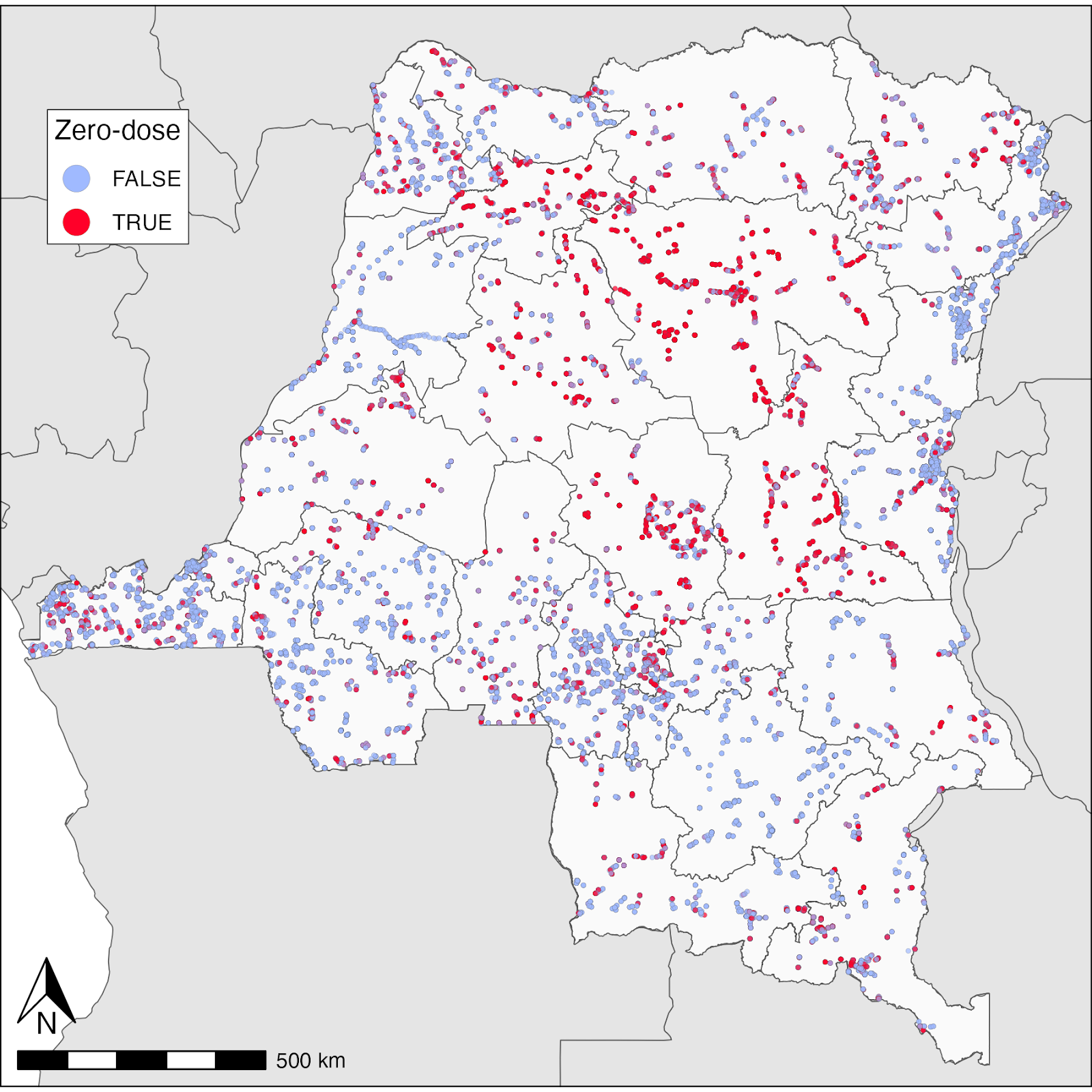
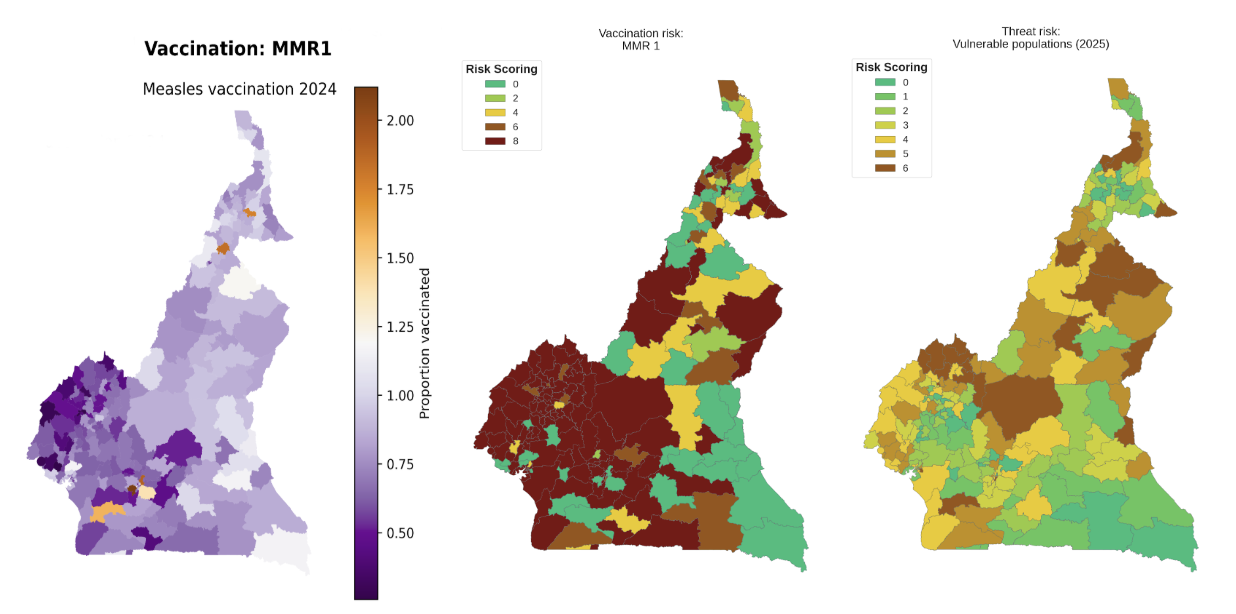
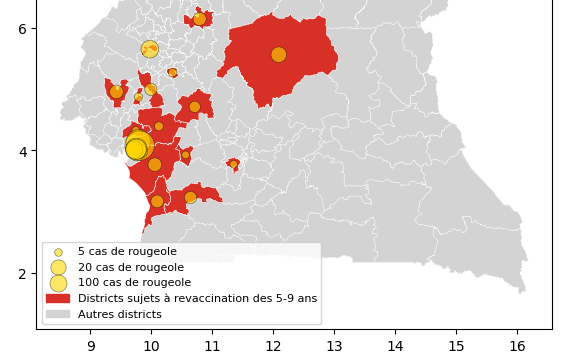
Programs also have to balance routine immunization, Periodic Intensification of Routine Immunization (PIRI), and vaccination campaigns, and decide where intensified activities and campaigns should go. Campaign targeting depends on knowing where immunity gaps sit, where outbreaks are likely, and what each operation costs to deliver.
At district level, EPI managers choose among fixed-site sessions, mobile and outreach strategies, demand-side interventions, and contact tracing. Finding the right mix for each area requires evidence on coverage, access, and vaccination services utilization at a fine geographic scale.
Gavi and its partners are formalizing these choices. Under Gavi 6.0, the Vaccine Portfolio Optimization and Prioritization (VPOP) approach supports countries in deciding which vaccines to introduce and how to optimize those already in their schedule. Alongside VPOP, CashPop applies the same optimization logic to Gavi’s programmatic cash support, so that vaccine envelopes and health systems funding are planned together. WHO, UNICEF, and Development Catalysts released an interim VPOP optimization toolkit in March 2026, and EPIs have started running VPOP exercises with their NITAGs, as in Sierra Leone in September 2026, Somalia, Senegal…
VPOP documentation identifies data as a key constraint. WHO notes that countries “often lack the data, bandwidth, and support structures” needed to review evidence. Gavi’s VPOP terms of reference call for “ensuring existing data is collected systematically and centralised to inform VPOP efforts.” A national immunization data repository gives countries that centralized foundation at national level.
Malaria programs have faced similar questions for years, and their experience offers a useful starting point.
Malaria programs face comparable challenges, although less complex ones. Over time, they have developed a clear vision: optimization sits at the heart of the malaria elimination and eradication agenda, and it depends on a data integration infrastructure. That infrastructure needs to be an environment where all malaria data is stored and can be used for planning, optimization, and evaluation.
The World Health Organization (WHO) describes the national malaria data repository (NMDR) as a country-owned digital platform that combines malaria data from multiple sources into one structured system. According to the WHO guidance on establishing a national malaria data repository, an NMDR brings together data flows that usually sit in separate systems:
An NMDR connects and harmonizes data from platforms such as DHIS2 and logistics management information systems (LMIS) without replacing them. The NMDR becomes the data backbone of precision public health for the malaria program.
National malaria control programs are now setting up NMDRs in multiple countries, including Cameroon, Guinea, and Niger, with Bluesquare’s technical support. Most of these repositories run on dedicated DHIS2 instances, with OpenHEXA handling data integration and advanced processing. Standardized technical and operational guidance is being developed with PATH, CHAI, WHO, and the Global Fund. A Francophone community of practice also connects the countries involved (implementation lessons on the DHIS2 Community).
Immunization programs could build on the same model, but their data landscape is more complex.
Data fragmentation is a greater challenge for immunization than for malaria. Yet there is less guidance on how to address it.
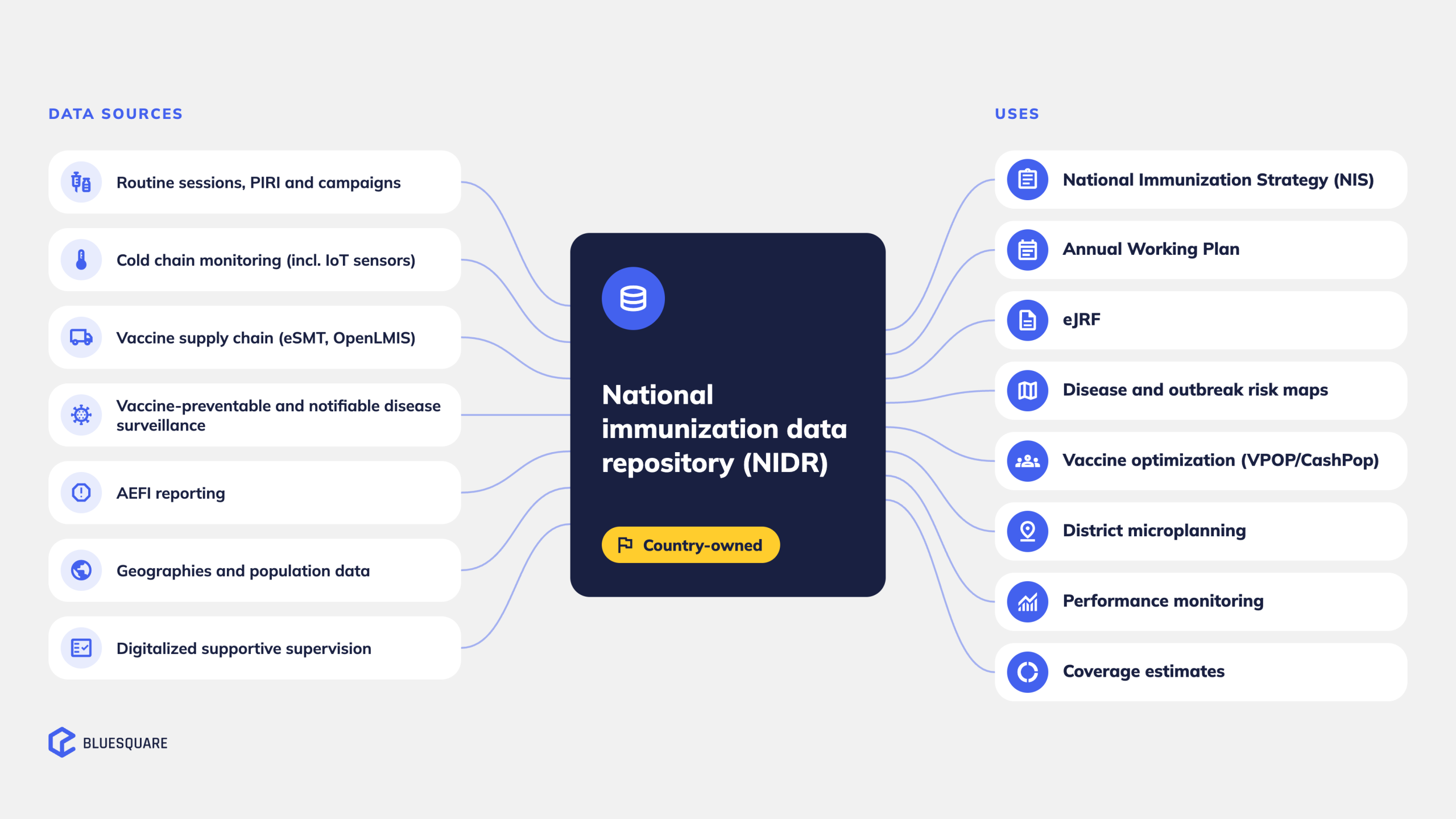
A typical EPI program generates data across many separate systems:
Each flow answers a part of the question. None of them answers the full question alone.
Despite this fragmentation, few references exist on immunization data integration. EPI managers and their partners still lack answers to 3 basic questions: where to start, which infrastructure to use, and which data products to build first.
Answering these questions opens a wide range of uses.
A national immunization data repository brings EPI data flows into a single, governed environment that the country owns and fully controls. EPI programs can use these integrated data to plan and monitor delivery, and NITAGs can draw on the same evidence base for their recommendations. Uses include:
Whatever the use case, the same integrated foundation is needed. An NIDR is that foundation.
The NMDR experience shows what becomes possible when a program owns an integrated data environment. Immunization programs deserve the same foundation, adapted to their own data flows and decisions. Bluesquare wants to contribute to shaping the national immunization data repository concept alongside WHO, EPI programs, NITAGs, and technical partners.
If you find this approach relevant and would like to team up on it, reach out to us through our immunization expertise page, or learn more about our malaria data work.