Accurate, up-to-date population data are essential for allocating resources appropriately and planning immunization campaigns effectively, including those targeting Measles and Rubella. Outdated figures can lead to missed targets, under-immunized communities, and wasted resources. In Cameroon, Bluesquare has leveraged its expertise in population modeling and data analysis to develop innovative methods for estimating target population for campaign digitalization, supporting the national immunization strategy of the EPI.
For effective immunization planning in Cameroon, the country’s Expanded Program on Immunization (EPI) must know where target populations are located. However, this is challenging because the last general population census was conducted in 2005, and its 20-year-old data no longer accurately reflect the current population distribution. Over the past years, regional instability, internal mobility, and rapid urbanization have led to significant population movements. Cameroon also hosts a large number of refugees and internally displaced persons, many of whom are integrated into local communities, making their numbers complex to estimate. These discrepancies introduce significant biases into target population estimates, affecting the accuracy of immunization coverage calculations and resource allocation.
In situations where population figures are hard to come by, national health programs now have the possibility to use population estimates derived from various modeling processes. In particular, WorldPop, at the University of Southampton, is a leading academic actor producing high-definition population maps to guide public health interventions. But in Cameroon, the most recent population estimate made by WorldPop was for the year 2022, leaving a four-year gap between that estimate and the immunization targets for 2026.
In the meantime, Bluesquare has been supporting the digitalization of micro-censuses conducted during various immunization campaigns in Cameroon between 2023 and 2024 and the result of this campaign. Micro-censuses are household enumerations collected before immunization campaigns to address the lack of precise data on target populations. Enumerators go to the areas where immunization campaigns will take place and collect field-level data on households and their composition at a fine-grained level. Since 2023, these micro-censuses have been collected using the digital micro-planning tool IASO Cameroon Collect®, developed by Bluesquare.
In working with the EPI and GAVI, we identified an opportunity to maximize the value of this digitized data. We decided to collaborate with WorldPop to use this campaign micro-census data and geospatial technology to create updated, high-resolution population estimates. As campaign micro-censuses are collected, it becomes possible to update population mapping estimates modeled by WorldPop and provide a more up-to-date estimation of population distribution across the territory.
Under the supervision of the EPI, and with funding from GAVI, we worked with colleagues at WorldPop to ensure they could use the most recent micro-census data collected in Cameroon and feed back updated population maps ahead of the 2026 strategic planning. Colleagues at WorldPop incorporated this new information and were able to update their estimates of geolocated populations across the entire Cameroonian territory and across a set of age groups relevant for the EPI’s activities planning.
After receiving these updates, we at Bluesquare were able to provide additional analyses, combining the updated population estimates with data from measles surveillance and immunization activities to help the EPI prioritize districts and target group age for immunization campaigns and support the estimation of the number of vaccines to be planned.
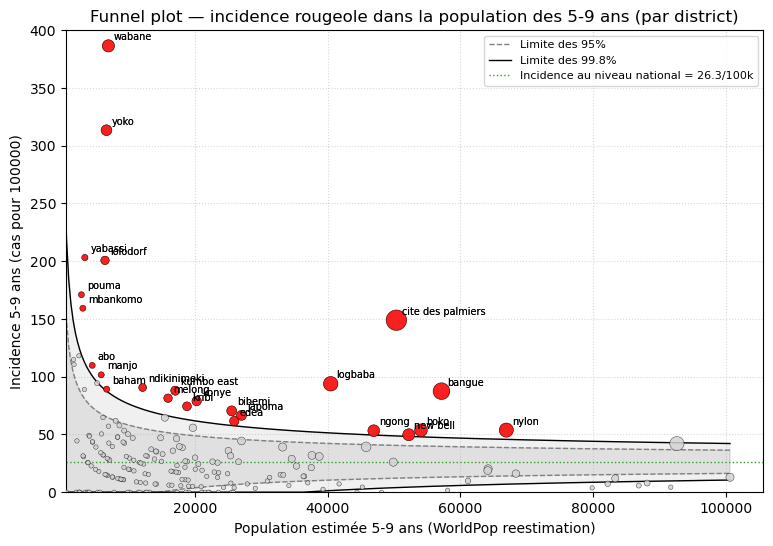
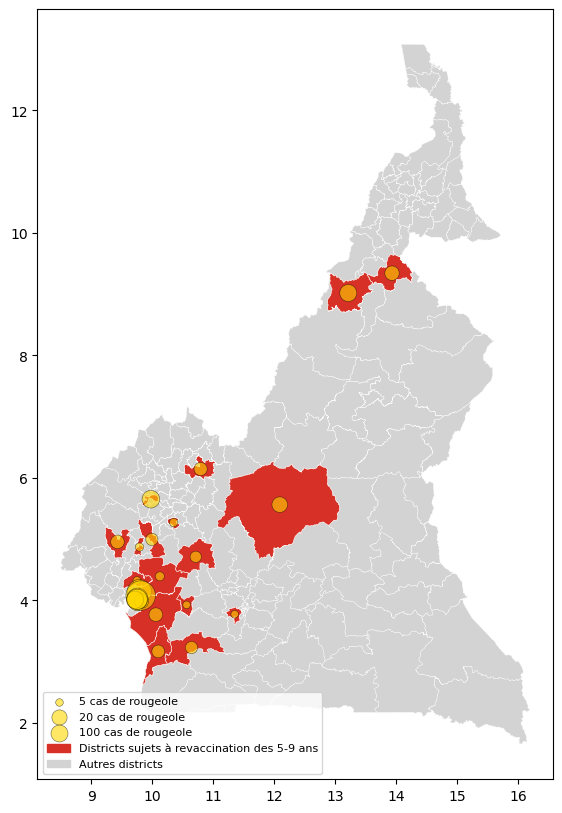
Visuals: Measles incidence graphic & mapping – Provisional results
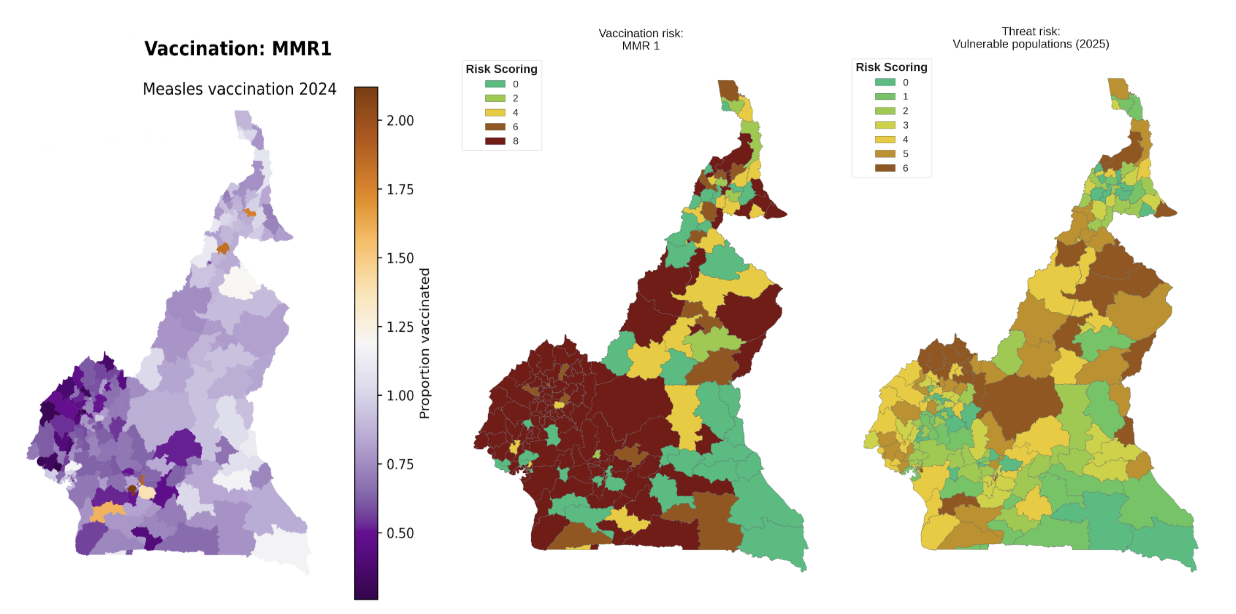
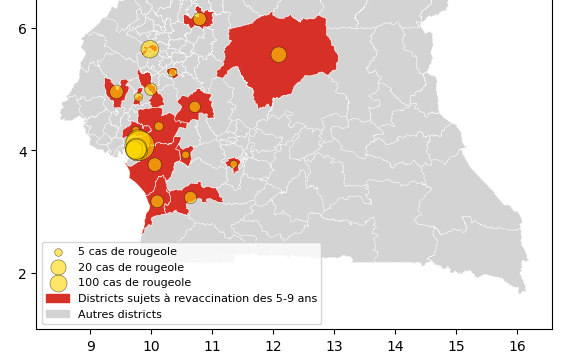
A second dimension of this project has been to map the risk of measles outbreak emergence, by providing insights on some elements that combine to heighten or diminish this risk. Using WHO’s risk assessment approach we computed maps that rate health areas on dimensions such the number of neighbouring districts with malaria cases, the speed of measles cases confirmation or populations vaccination rates.
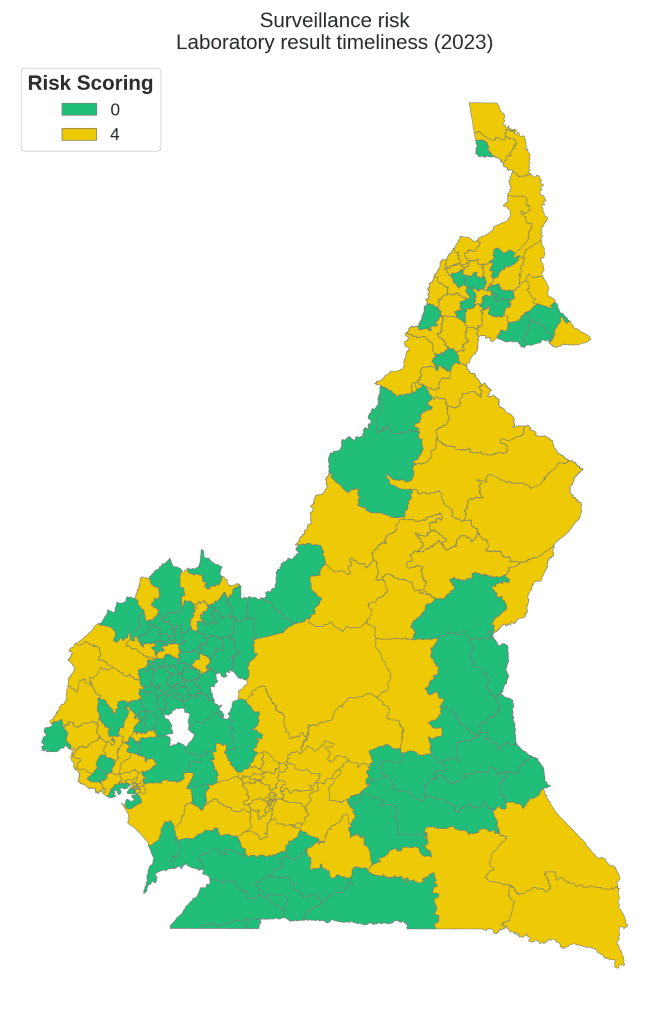
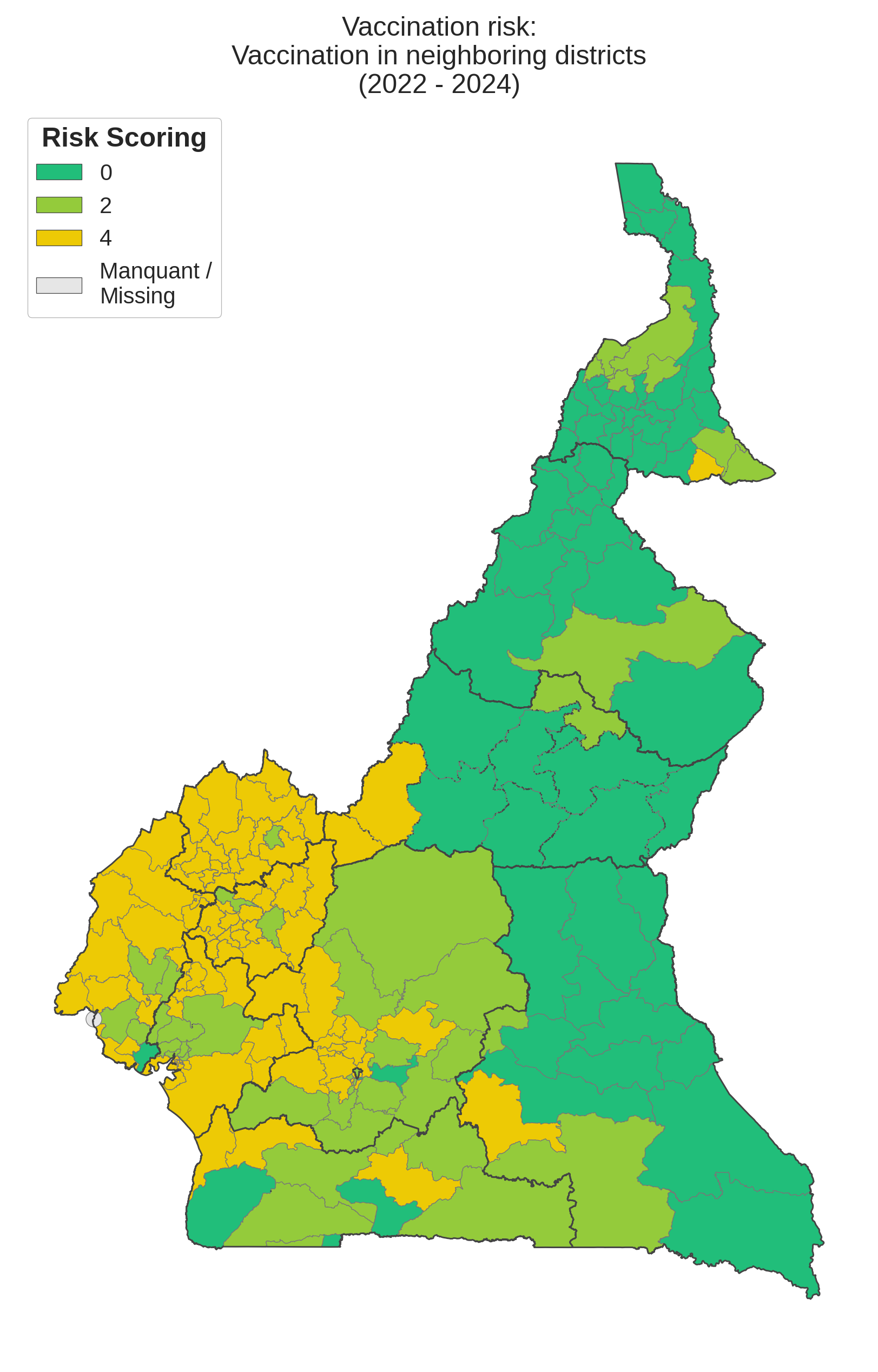
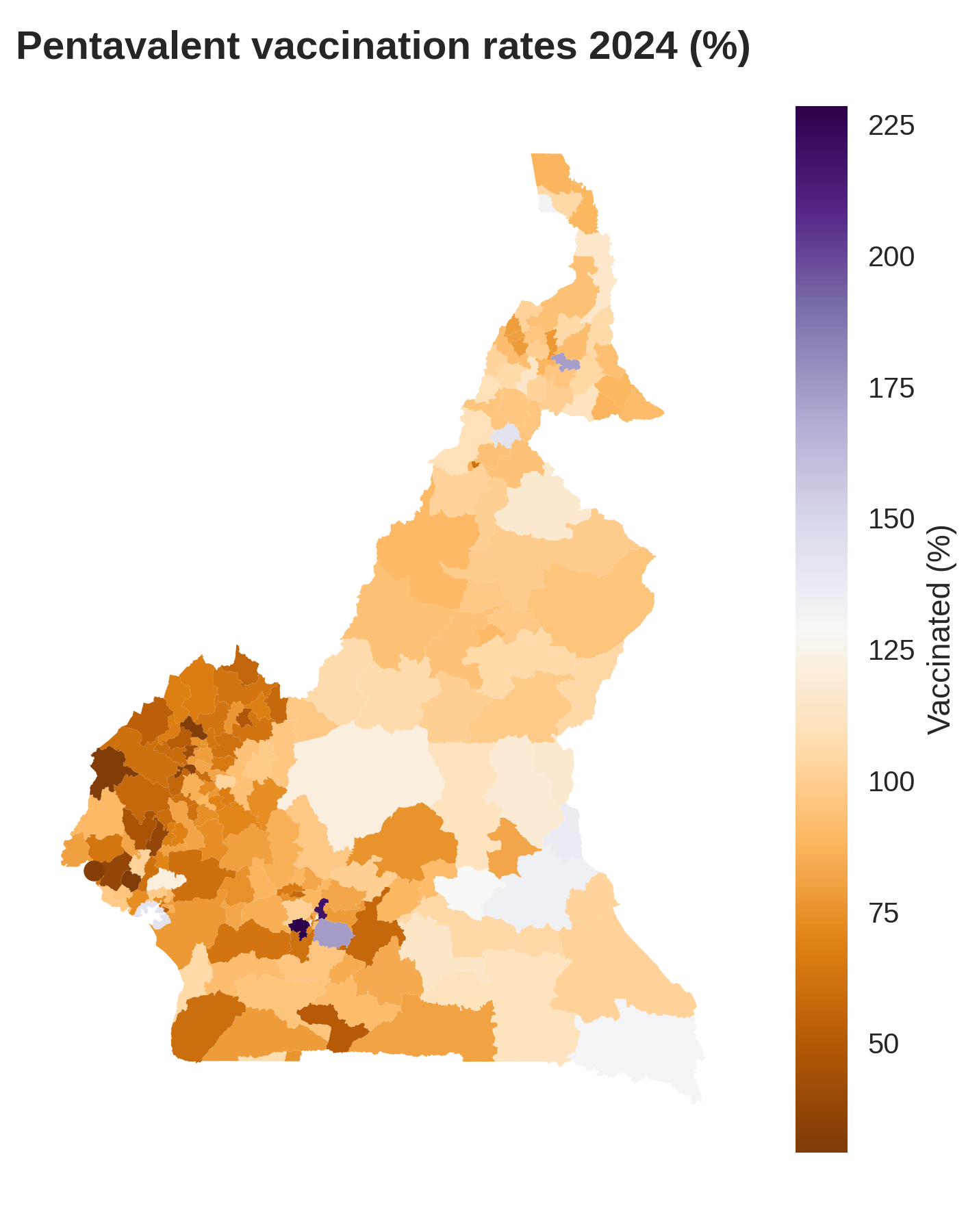
Visuals: Example of Risk mapping dimensions – Provisional results
The population mapping effort resulted in a strong proof of concept (POC) for continuously updating population maps using campaign data and geospatial modeling. The updated population mapping data enabled the EPI to plan for upcoming immunization campaigns. The estimated population data will be uploaded to the IASO platform to pre-populate micro-planning forms, directly supporting the planning of future immunization campaigns.