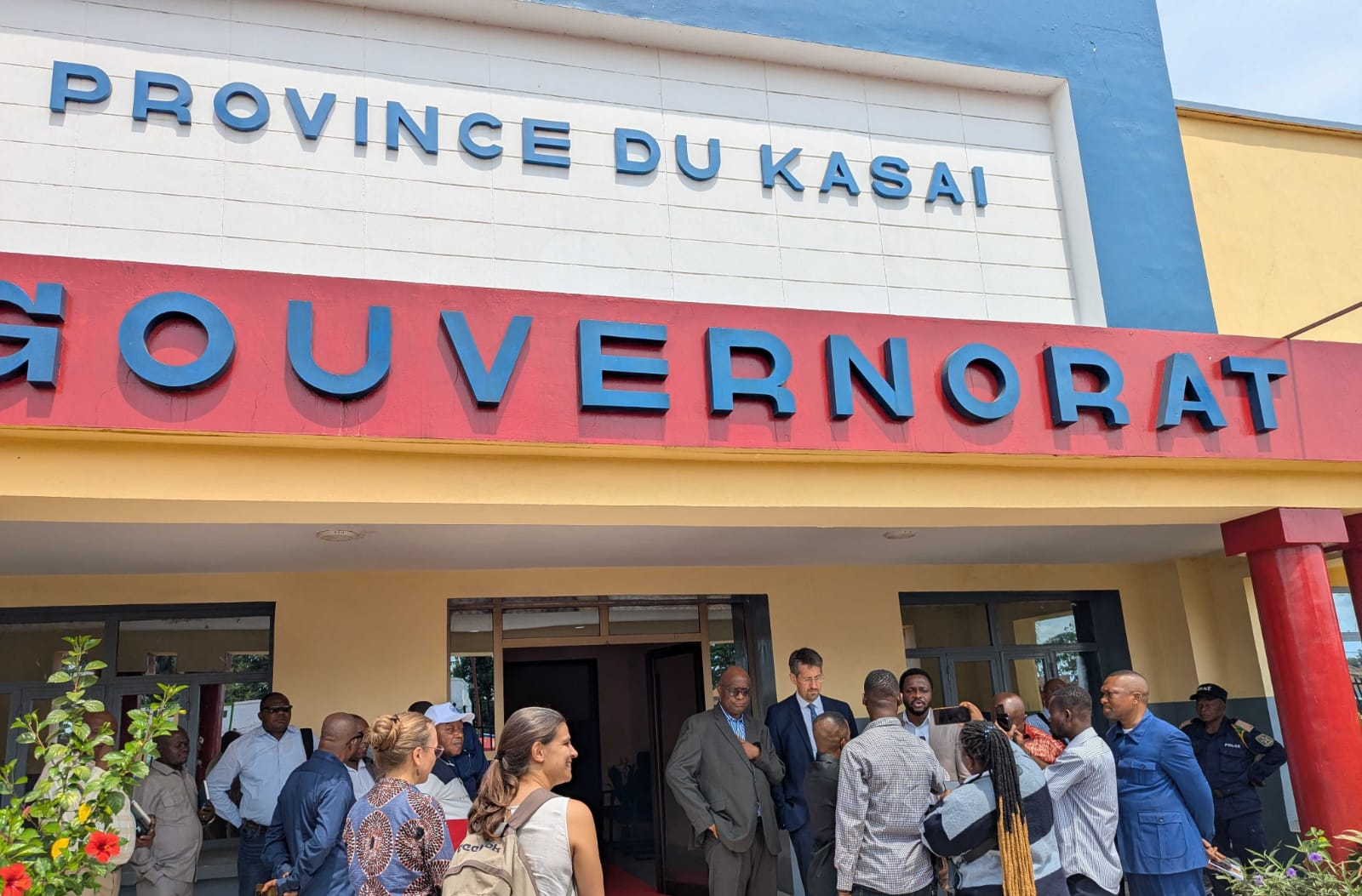
GiveWell has funded Bluesquare to implement a US$8.8 million multi-year project in Kasai province, DRC, aimed at improving routine immunization outcomes. Led by the national Expanded Program on Immunization (EPI) and Kasai’s provincial health authorities, the project targets a gain of 10 percentage points or more in immunization coverage, along with a reduction in zero-dose prevalence, across more than 100 health areas over 3.5 years. These health areas record an estimated 87,000 live births every year, the annual cohort of children that routine immunization needs to reach.
According to the DRC’s 2023-24 Demographic and Health Survey (EDS-RDC III), 39.1% of children aged 12 to 23 months in Kasai had received no vaccine at all, nearly double the national rate of 22.7%. This highlights the scale of under-immunization in the province and the need to reach children missed by routine immunization services. The project responds with a service delivery transformation (SDT) approach: instead of funding the same intervention everywhere, it adapts the response to each of the more than 100 health areas it covers.
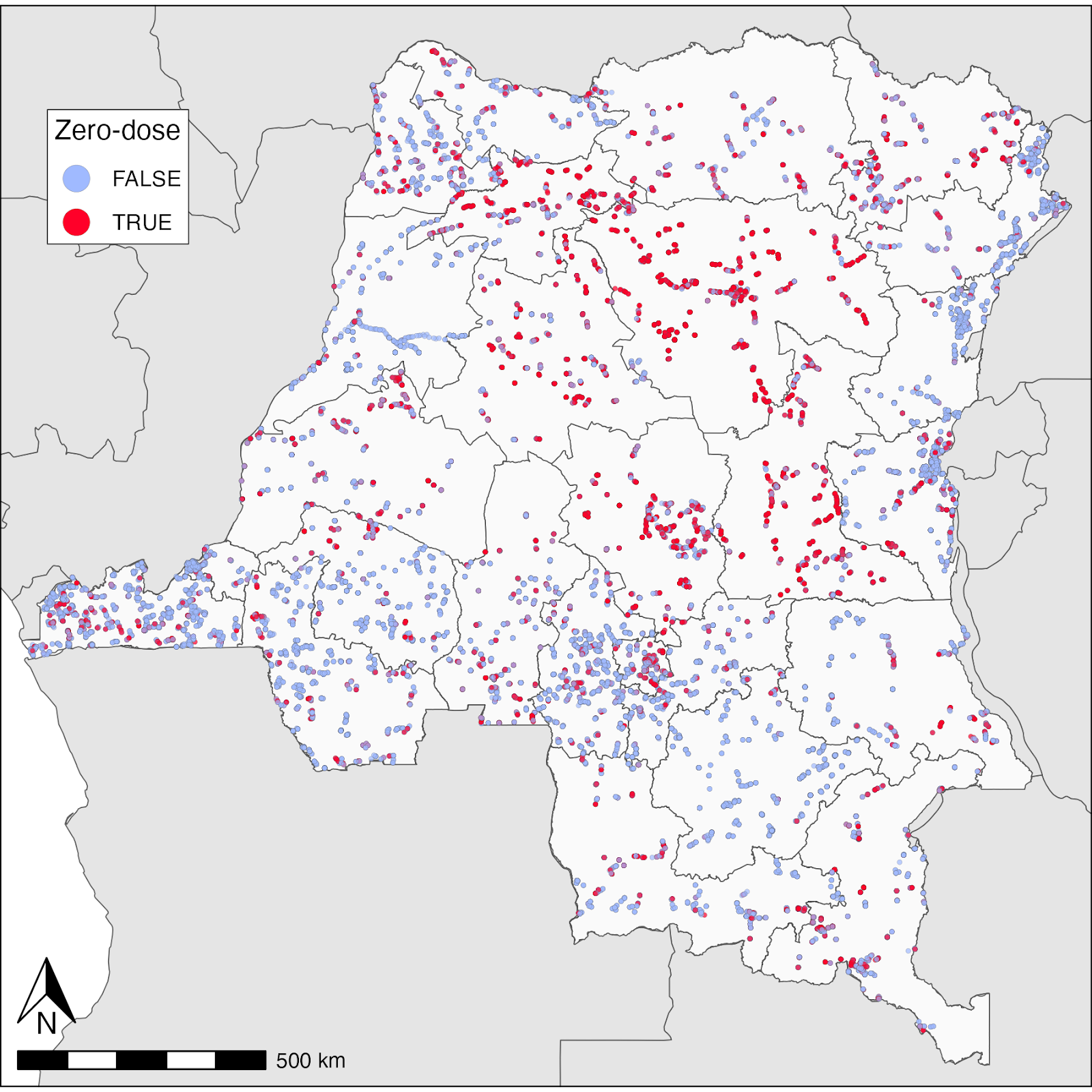
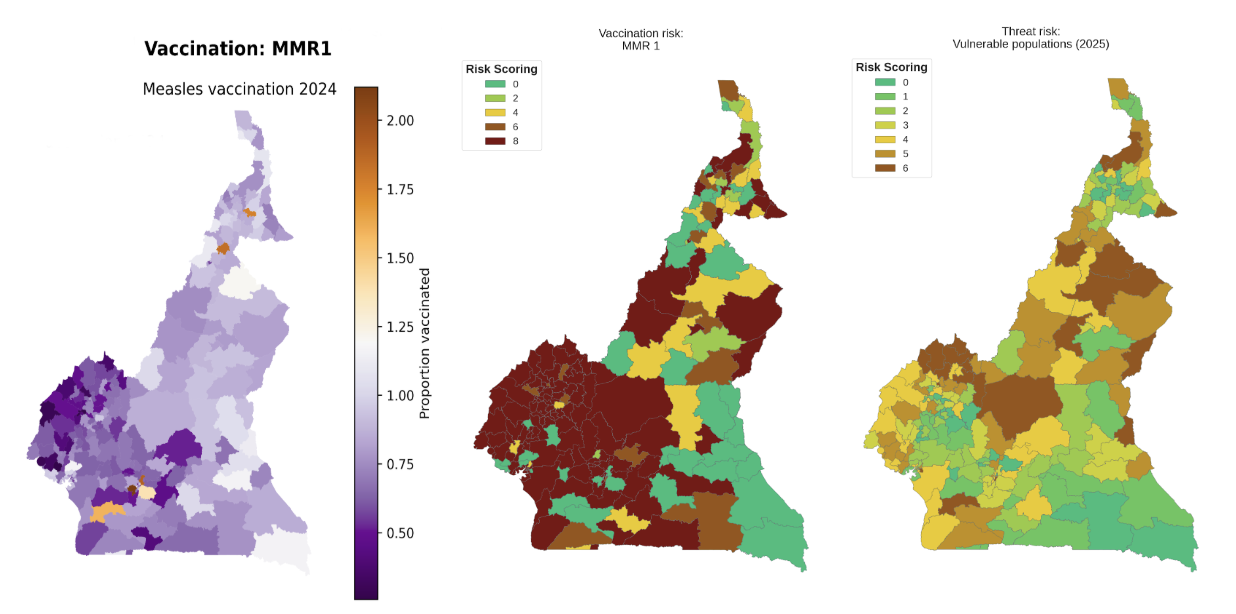
The process starts from what already exists. A baseline assessment digitizes each health area’s existing government-funded microplan. The project then combines that microplan with geospatial data and subnational immunization coverage estimates, optimizing six interventions: contact tracing and follow-up for children who have missed doses, extended clinic hours and improved service quality, new fixed vaccination sites in underserved areas, advanced outreach, mobile outreach, and demand-side incentives. The mix varies from one health area to the next.
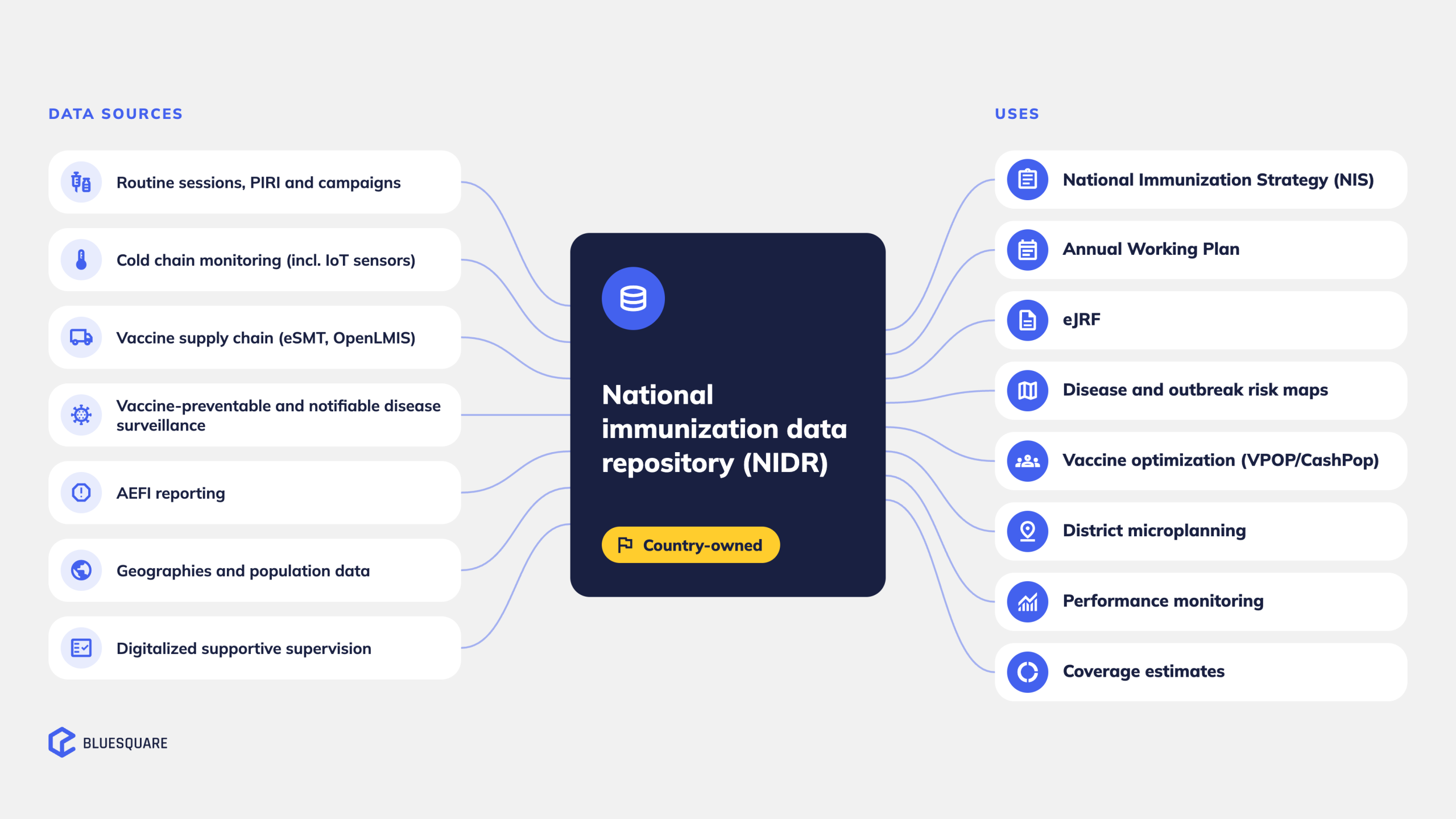
To support the full cycle, Bluesquare will develop an immunization intervention optimization platform covering targeting, contracting, financing, and monitoring. The platform is designed to scale, and it complements the data systems the EPI already uses and develops, so the same data is never collected twice.
Once a health area’s plan is agreed, financing is linked to delivery.
Health area teams then adapt the proposed interventions to the constraints they face on-site. Once the intervention mix is agreed, a contract formalizes the activities to be delivered and the funding attached to them.
The project relies on performance-based contracting: a portion of the funding is tied to verified results instead of being paid upfront. Each validated activity triggers a mobile payment to the health area teams that delivered it. Performance-based contracting, which links funding to interventions that actually reach children, is already used across global health programs in Kasai.
Contract management relies on EUP FASS, which brings long experience with this instrument in Kasai. Targeting, continuous tracking of activities, and payment verification all run on digital platforms. That makes verification the backbone of the model, including in health areas where connectivity cannot be assumed.
Paying for results means confirming, area by area, that each contracted activity reaches children. In much of the project area, immunization and contact-tracing sites operate in fully offline environments. The challenge is to capture activity data digitally under these conditions without adding to health workers’ workload.
Health workers document immunization activities on mobile devices that work fully offline. Data syncs once a health worker reaches a connected point, typically during a supervision visit, using an approach Bluesquare first developed for a sleeping sickness elimination project in the DRC.
The verification data is then consolidated with data from the DRC’s existing systems into a single view of delivery across health areas. That shared view supports the validation of activities for payment.
The project is part of a broader GiveWell investment in vaccination.
The project is one of several vaccination grants GiveWell has made to increase routine immunization coverage. GiveWell has supported vaccination programs since 2015, with over $200 million in vaccination-related grants to date. Elie Hassenfeld and Natalie Crispin describe this work in GiveWell’s podcast episode on new strategies to increase vaccination coverage.
In the DRC, the project is one of several immunization programs Bluesquare already supports alongside the EPI, from georegistry and digital microplanning to continuous performance monitoring of the Mashako 3.0 plan and immunization coverage modeling with the Kinshasa School of Public Health (ESPK). Kasai is where these components come together to put the service delivery transformation approach into operation.
Bluesquare thanks GiveWell and the DRC’s Expanded Program on Immunization for this exciting collaboration.
Learn more about Bluesquare’s expertise in immunization.