Health threats are multiplying and growing more complex. To respond, health authorities need to detect signals earlier, measure their response capacity in real time and coordinate many actors. Between March 2025 and June 2026, the Directorate of Epidemiology and Disease Control (DELM) of Morocco’s Ministry of Health and Social Protection (MSPS) designed a new information system for public health emergency watch, surveillance, preparedness and response (SI-VSPR), with technical support from Bluesquare.
Traditional epidemiological surveillance relies on case reporting by health professionals, followed by compilation and analysis. This model is reaching its limits today, driven by 4 developments.
Health risks can be biological, chemical, environmental, climatic or social. Many emerge at the interface between human health, animal health and the environment. The One Health approach requires combining veterinary, entomological, climate and environmental data with human health data. Watch activities must also continuously track international signals, such as those from EIOS or ProMED, to anticipate cross-border threats.
The data useful for surveillance are no longer limited to reporting forms. They come from patient records, hospital and laboratory systems, health insurance, the private sector, registries and sources outside health. Each source has its own formats and reference standards. Without interoperability, these data remain siloed and underused.
Digitalization projects are multiplying: patient records, hospital information systems, health insurance, tools for vertical programs. Each project produces routine data that can feed surveillance, provided the systems are connected. Without this, every new system adds another silo and another data entry burden for health professionals.
Modern data platforms can automate ingestion, quality control and indicator production. Artificial intelligence opens up new possibilities: detecting anomalies, spotting weak signals, assisting data exploration. These tools require clear governance, traceable processing and controlled hosting of sensitive data.
Morocco made these developments the foundation of its system overhaul.
The assessment carried out in March 2025 confirmed real achievements in digitalization and in the quality of epidemiological data. It also identified fragmented sources, data collection that is still largely manual, insufficient interoperability and only partial integration of data from the private sector and other sectors. This work is part of a deep reform of the health system: the generalization of compulsory health insurance (AMO), and the creation of the High Authority for Health, the General Directorate of Information Systems and Digital Affairs (DGSIN) and the Territorial Health Groups.
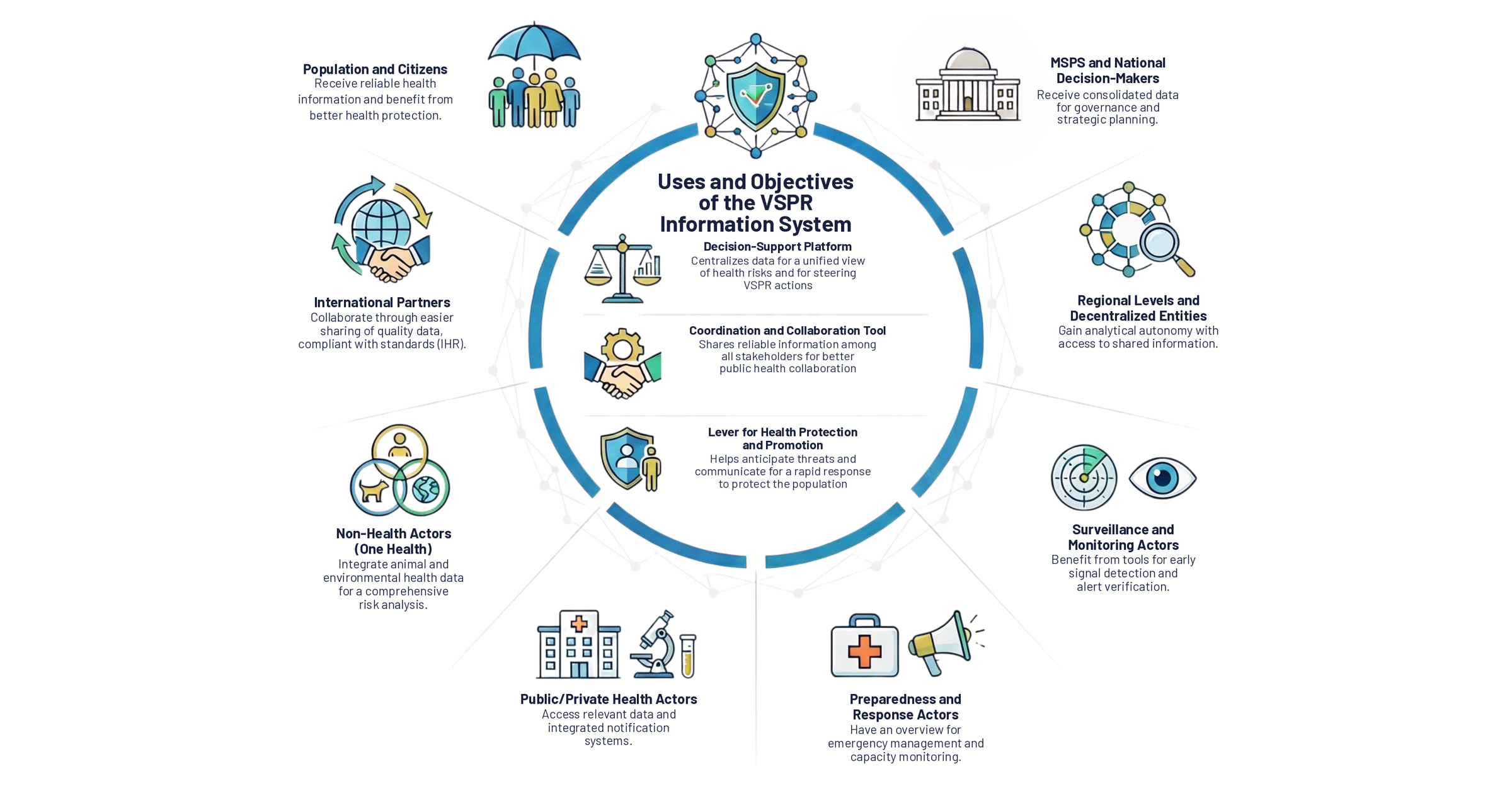
The SI-VSPR complements existing systems without replacing them. It first makes use of data already produced in routine and reserves any new data collection for critical information unavailable elsewhere. Mandatory notification becomes partly automatic, through rules applied to the flows of patient records, hospitals and laboratories.
The central platform connects to source systems directly or through the National Interoperability Gateway. It standardizes data according to common reference standards and provides secure workspaces. Data are hosted on national infrastructure, and AI features remain under the Ministry’s oversight.
This second layer produces dashboards for routine and crisis management, automated bulletins and situation reports, alert flows and information for the general public.
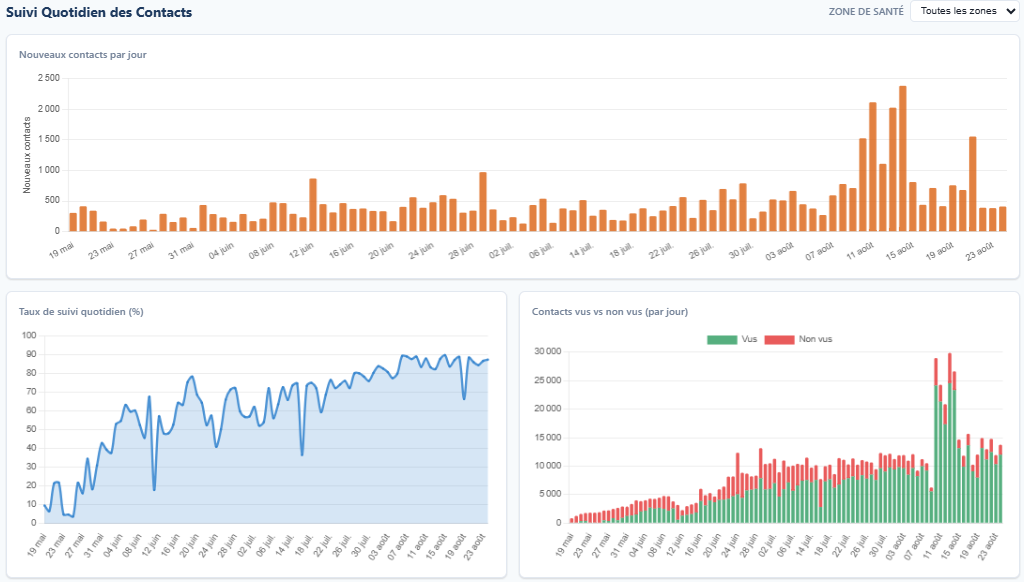
These web and mobile tools are code-free (no-code), work offline and include a georegistry. A new data collection project can be activated in less than 1 day, for example to follow contacts or update bed and stock capacity during an emergency.
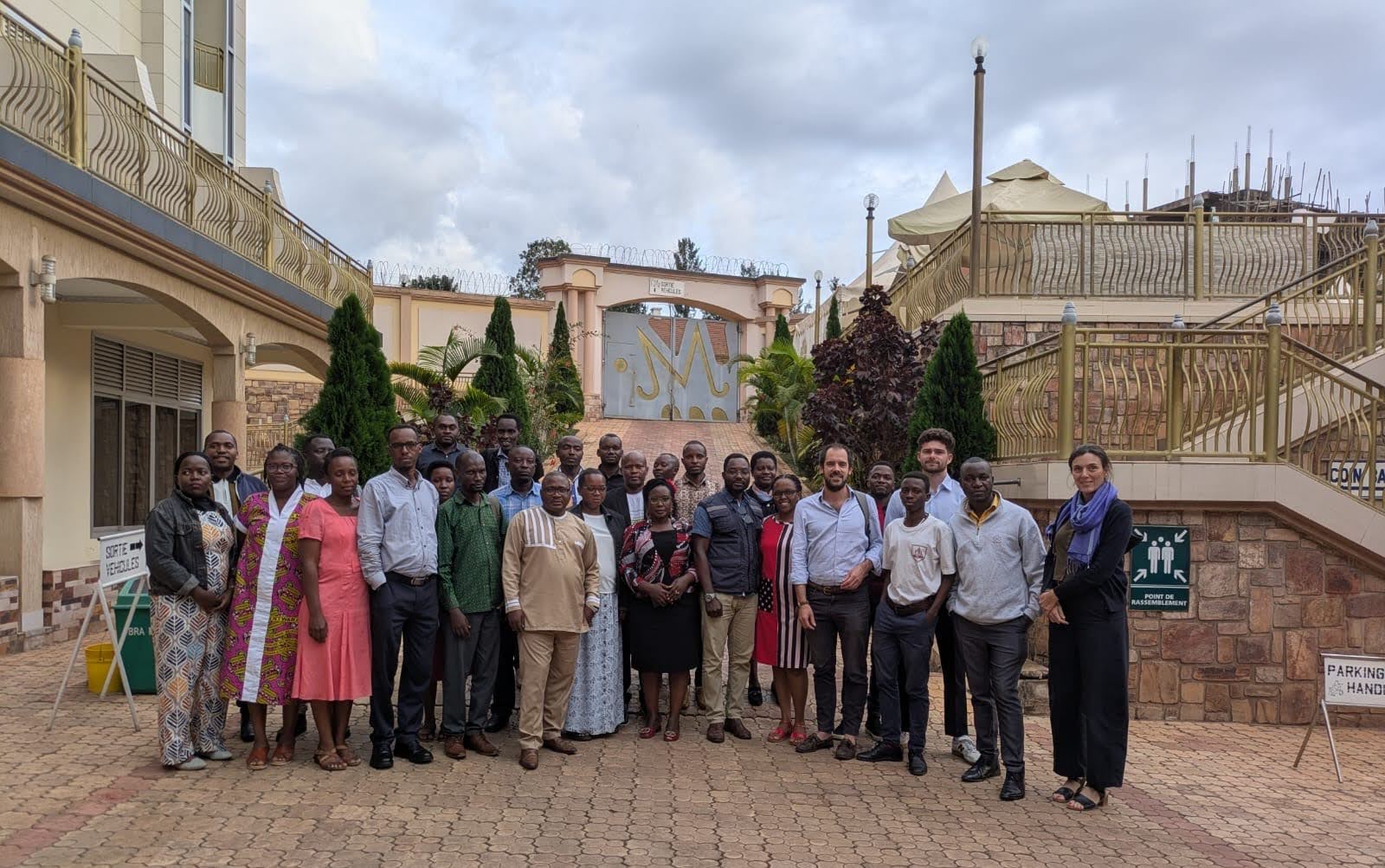
The Epidemiological Surveillance Service (SSE), the National Public Health Emergency Operations Center (CNOUSP) and the Information and Methods Division (DIM) led the work in 4 phases: analysis, consolidation, review and feedback. More than 10 institutions were consulted, including the Pasteur Institute, ONSSA, the Digital Development Agency and the Tangier University Hospital (CHU). Deliverables include a functional analysis, technical specifications and a 36-month roadmap.
The design phase of the SI-VSPR is now complete.
We thank the Moroccan teams who carried this work forward: the DELM, the SSE, the CNOUSP and the DIM, along with all the institutions consulted. Their commitment made it possible to design a system rooted in the country’s real needs and ready to integrate future technological developments.
To learn more, explore our expertise in One Health surveillance and our technical assistance services.