In Burundi, as in many countries, epidemic disease surveillance has long relied on ad hoc channels, set up according to the needs or emergencies of the moment. The Public Health Emergency Operations Center (COUSP) faced a clear diagnosis: no single system connected notification, investigation, laboratory and care. This fragmentation slowed down the response and undermined the quality of decisions in times of crisis. Find out how the project carried out with the COUSP, the Directorate of the National Health Information System (DSNIS), the National Institute of Public Health (INSP) and its partners, including Enabel, transformed this situation.
Burundi faces recurrent and intertwined epidemiological threats: cholera, Mpox, yellow fever, as well as the persistent risk of a first detected case of viral hemorrhagic fever, given its proximity to the DRC and cross-border flows. Before the project, surveillance of these diseases was well structured according to the Integrated Disease Surveillance and Response (IDSR) guide, but data circulation remained largely manual, relying on one-off exchanges. Transmission delays between sites and the laboratory stretched over several days. No automatic integration existed between the DHIS2 used for routine data and the COUSP’s operational data. Epidemiological analyses required manual compilation. This fragmented approach meant the COUSP never had a consolidated, real-time picture of the situation.
The objective was therefore to transform this fragmented surveillance into a system able to support an integrated response to several diseases, while ensuring interoperability with the national health information system.
The project adopted a 3-tier approach, directly aligned with the operational needs of the COUSP.
The foundation is the DHIS2 Tracker, an individual tracking system that structures the full pathway of a suspected case. Rather than scattering information across paper forms and separate registers, the Tracker guides data entry through a standardized workflow: initial notification, in-depth investigation, sample collection and traceability, transmission of laboratory results, care, and case closure.

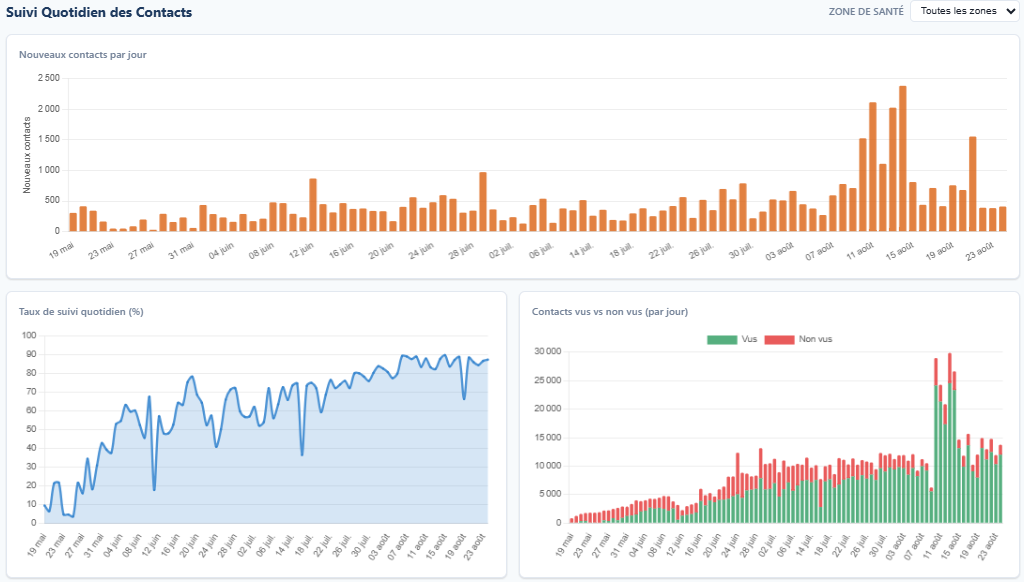
Patient flow from notification to care in the COUSP DHIS2 Tracker
This structured approach brings 3 immediate benefits. First, it standardizes case definitions: all sites use the same classification criteria. Second, it enforces consistency: the system rejects inconsistent entries and guides the user through logic rules. Finally, it enables complete longitudinal patient follow-up at all points of contact, with data collected at the time of identification and throughout the different phases of diagnosis and treatment.
Once collected in a structured way, the data must converge on a central platform where it is consolidated. This is the role of OpenHEXA. The integration platform automatically orchestrates the data pipelines that connect the DHIS2 Tracker to similar data coming up through the national health information system. These data are compared to facilitate their validation and use.
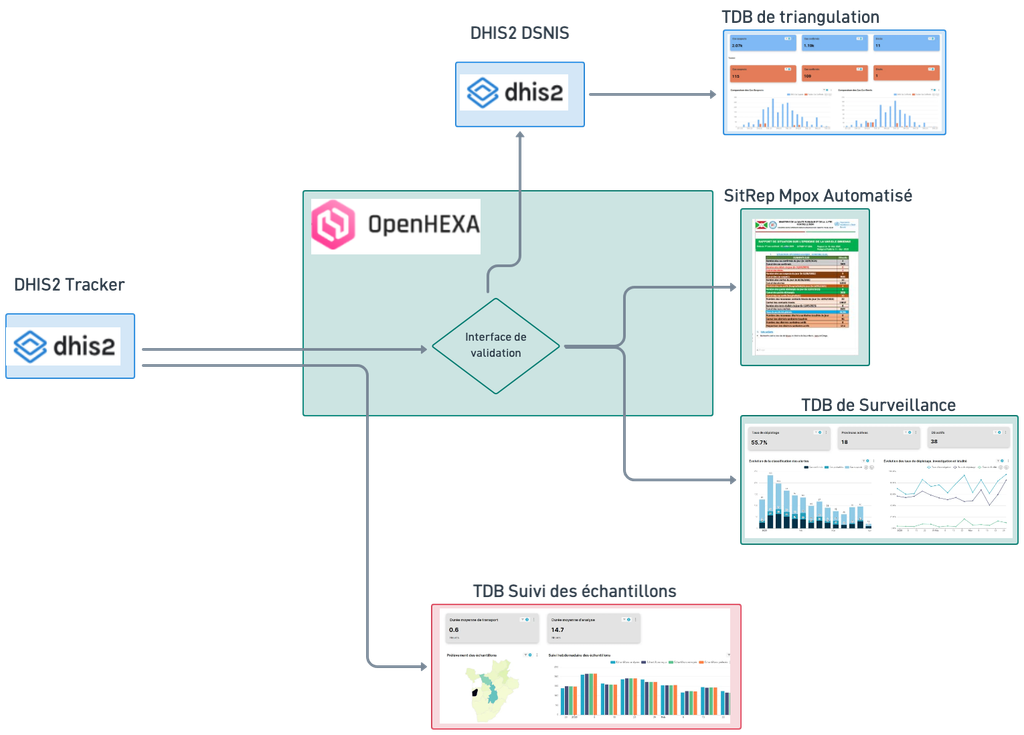
Automated data integration architecture with OpenHEXA and DHIS2 to support the COUSP in decision-making
The last step turns this consolidated data into information the COUSP can use directly. The project put 3 products in place.
A surveillance dashboard provides a consolidated real-time view: case distribution by location, trends over time, alert signals. A laboratory dashboard gives visibility on sample flows: volumes collected, diagnosis turnaround times, testing rates, bottlenecks identified. A triangulation tool cross-checks COUSP operational data with DSNIS aggregated data to consolidate the analysis and assess the completeness of Tracker data.
Technical infrastructure is only useful if it is used. For this reason, the project gave equal attention to the training of trainers and to capacity strengthening for the COUSP and its partners.
A specialized training on DHIS2 Tracker was organized for the ministry’s technical staff, covering not only use but also maintenance, logic rule configuration and data quality principles. A second training covered OpenHEXA orchestration, data pipeline principles and supervision of automated flows. Finally, a training on dashboard interpretation and use of the analytical products prepared COUSP decision-makers to make use of the infrastructure.
This cascade training approach (in-country trainers being able to train others in turn) was crucial for sustainability. Beyond the implementation phase, it is the COUSP and its partners who ensure the system’s evolution, the addition of new diseases, and continuous improvement.
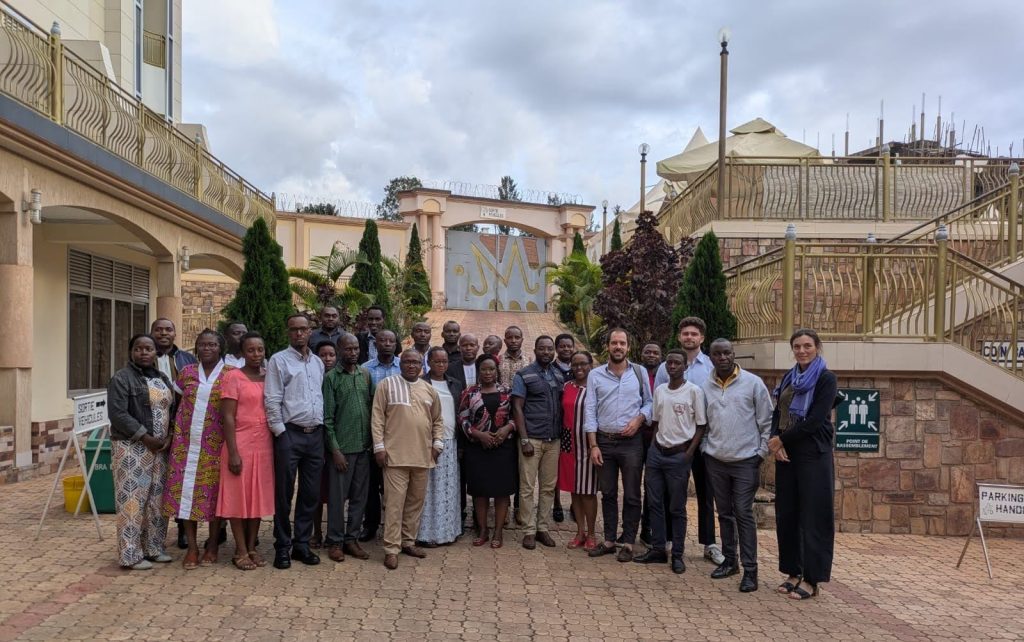
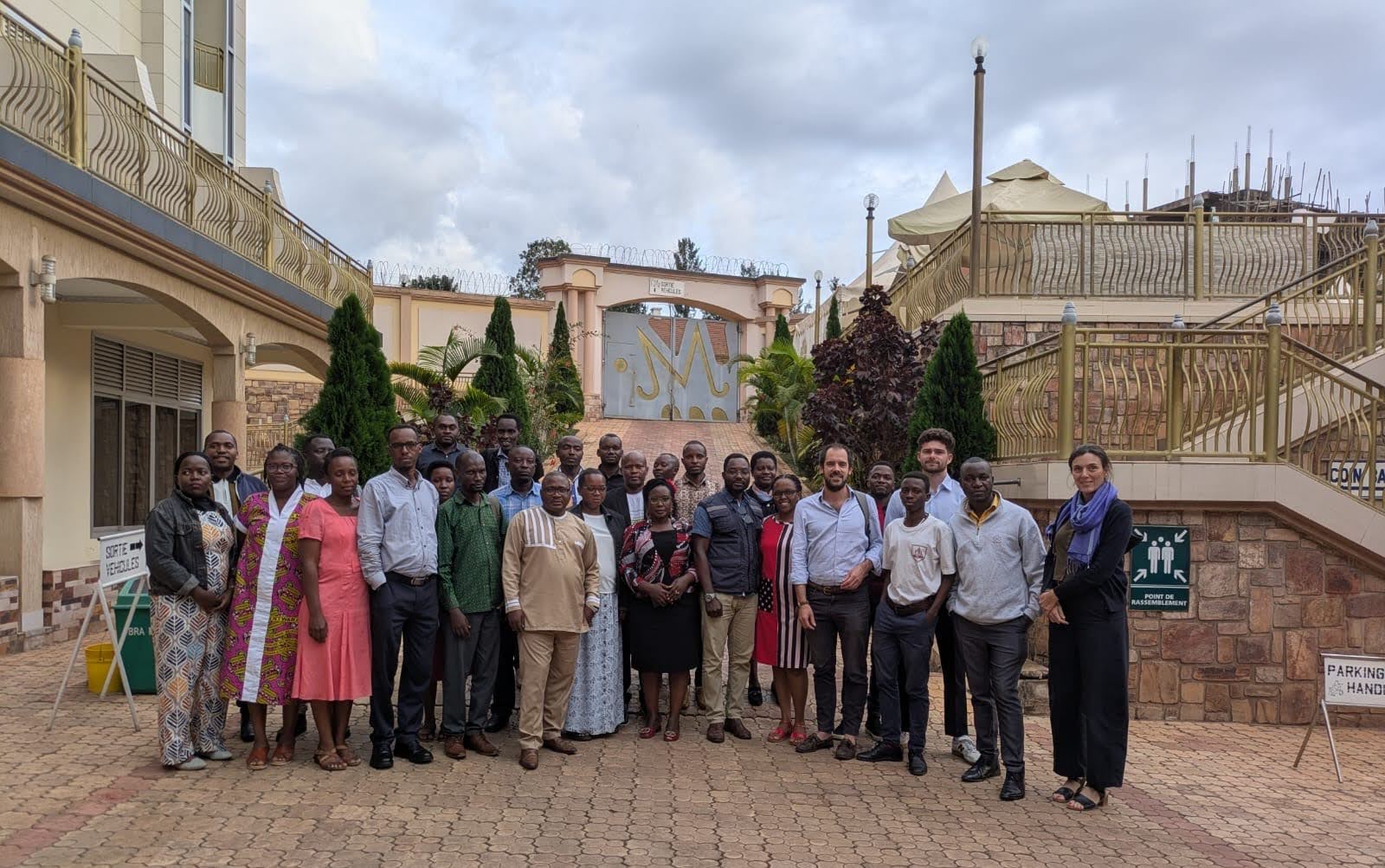
Training on OpenHEXA and the use of the DHIS2 Tracker with the COUSP, DSNIS and LNR teams
The initial project laid the foundations. However, real sustainability requires a consolidation phase. The COUSP and the ministry are working to strengthen operational routines: technical support, data supervision, maintenance of OpenHEXA pipelines, and evolution of the trainings based on lessons learned.
Integration with the rest of the health information system remains a challenge. Data analytics for health system governance requires case-based surveillance to also connect with routine data, financial data and access data. Burundi is moving forward on this front, in coordination with national and international technical partners.
The Burundi project shows that a surveillance transformation is possible in an LMIC context (resource-constrained countries):
Burundi’s experience suggests that adapting the architecture to the context, involving technical staff and decision-makers early, and balancing training and technology are key success factors. Other countries considering similar strengthening could draw on these elements in line with their own realities.
To explore how this approach could apply in your country, see our expertise in integrated disease surveillance and response.