
Integrated data systems that help national HIV programs follow people on treatment, secure ARV supply and report on results.
HIV data management brings together the information national programs need to follow people living with HIV over time, keep antiretroviral (ARV) medicines in stock and report on results. Bluesquare supports ministries of health, national AIDS control programs and their partners as they build these data systems, from prevention and self-testing to treatment, drug resistance monitoring and donor reporting.
National HIV programs and their partners in the Democratic Republic of the Congo (DRC), Côte d’Ivoire, Morocco, Senegal, Mali and the Central African Republic rely on systems Bluesquare helped design and deploy. Each system starts from the tools already in use in-country and connects them, using open-source platforms such as DHIS2, IASO and OpenHEXA.
How many people are actively followed in a national HIV program? The question sounds simple. Answering it reveals the main obstacles HIV programs face with their data.
Each solution below answers one of these challenges. National programs and their partners shaped every system, and all of them rely on open-source tools that in-country teams can run and maintain.
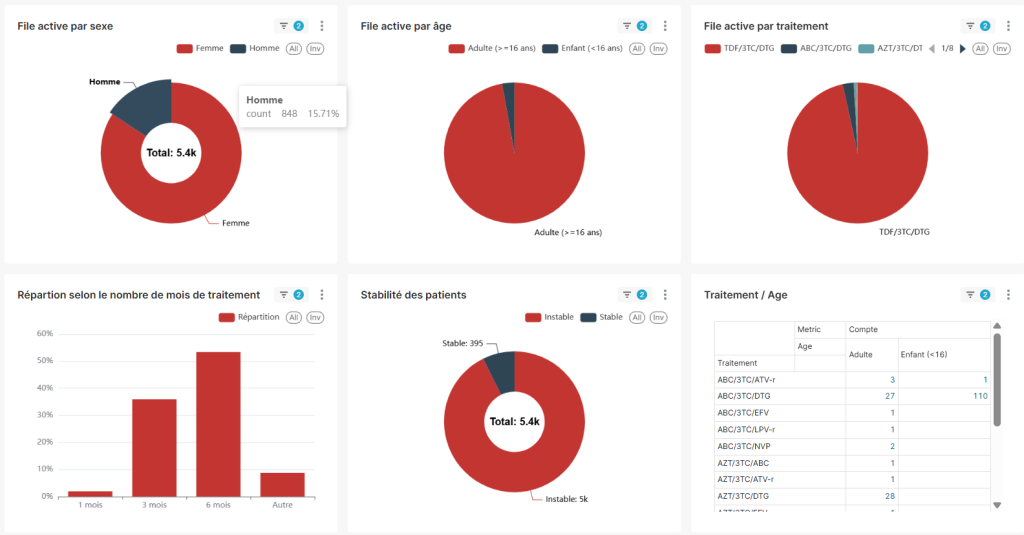
A national HIV active file consolidates, in one secure database, the records of all people on antiretroviral therapy (ART) in a country. Built on IASO, an active file system integrates existing data sources and detects duplicates automatically, using simple and flexible rules. Data entry works on web and mobile, including offline, from primary health facilities to the central level. Synchronization runs as soon as a connection is available.
Cohort monitoring dashboards turn these records into the indicators national programs use every day: new enrollments on treatment, distribution by treatment line and regimen, share of people on TLD (tenofovir, lamivudine, dolutegravir), months of dispensing and data completeness by site and region. Automated alerts remind health facilities to submit their data and flag delays, anomalies and completeness gaps, so records stay current along each person’s care pathway.
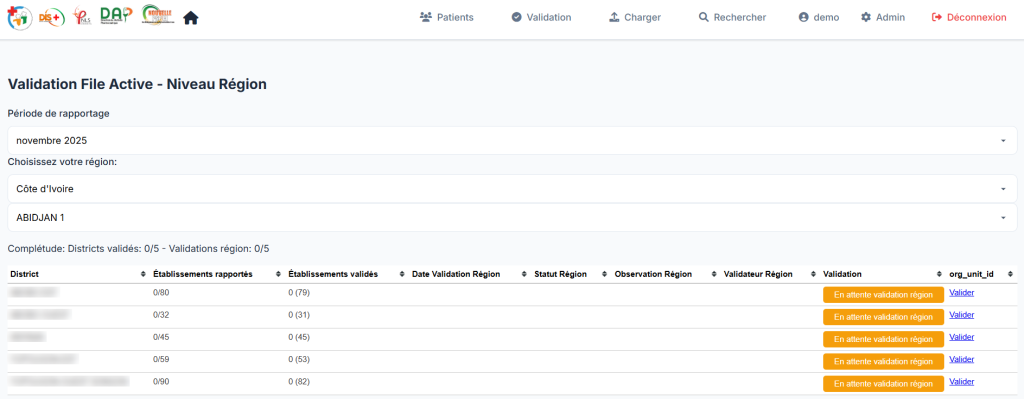
HIV active file systems apply strict data protection practices. Secure, regularly backed-up hosting and differentiated access rights let each institution, such as the national AIDS control program or the health information directorate, see only the data relevant to its level. Ready-to-use export files feed directly into ARV quantification, so quantification teams spend their time preparing orders instead of preparing data.
In Morocco, the Ministry of Health and the Global Fund follow HIV prevention programs among key populations with a dedicated DHIS2 Tracker. Bluesquare configured the tracker around a unique anonymous identifier, which allows longitudinal follow-up of each participant without revealing their identity. The system replaced fragmented Excel spreadsheets with one standardized and secure tool shared by national health teams and partner NGOs.
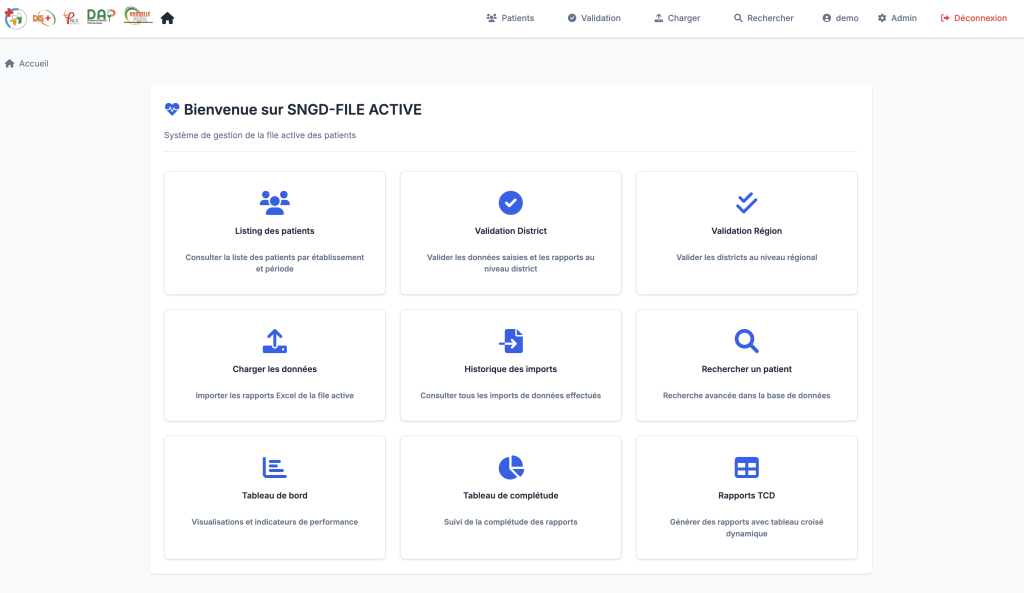
In Côte d’Ivoire, the Ministry of Health’s national AIDS control program (PNLS) and the Nouvelle Pharmacie de la Santé Publique (NPSP), with USAID support through LHSPLA, use SNGD-FACT, a national active file data management system built with OpenHEXA and IASO. SNGD-FACT replaced fragmented Excel files with a centralized platform for HIV tracking and ARV supply chain management. 3 decision-support tools complete the system, including a data triangulation tool that matches DHIS2 epidemiological data with eSIGL logistics data to detect inconsistencies between services delivered and medicines consumed.
In the DRC, Cordaid, Principal Recipient of a Global Fund grant, monitors HIV and tuberculosis commodities through supply chain dashboards that connect DHIS2 with the Data Collect app and the Hesabu calculation engine. Key logistics indicators, such as average monthly consumption, months of stock available and flow coherence, are calculated automatically. Program teams can break data down by health facility, region and category of people on treatment. Read more about our supply chain and logistics expertise.
The ATLAS project, led by Solthis and funded by Unitaid and the French Development Agency (AFD), distributes HIV self-testing kits in Senegal, Mali and Côte d’Ivoire. Bluesquare implemented a DHIS2 data warehouse and offline mobile data collection tools to monitor distribution channels and indicators across the 3 countries. The setup includes 24/7 cloud hosting and web dashboards for donor reporting.
In the DRC, the Johnson & Johnson HIV Drug Resistance (HIVDR) initiative brings together the Ministry of Health’s national HIV programs (PNLS and PNMLS), the Global Fund, CDC/PEPFAR and the Kinshasa School of Public Health. Bluesquare supported the initiative’s data and analytics work. National HIV cohort audits, routine data from the national health information system (SNIS) and genetic resistance survey data were brought together in one centralized data warehouse.
On this foundation, machine learning, statistical modeling and geospatial analytics estimate WHO Early Warning Indicators (EWIs) and the prevalence of detectable viral load from routine health data. The team worked with DHIS2, IASO, OpenHEXA, GeoHealthAccess, Python and R, and geolocated facilities providing HIV services. The initiative produced validated predictive models of HIV drug resistance risk in resource-constrained settings. Learn more about our data modeling and AI services.
Automated reporting frees national teams from manual calculations. In Morocco, the DHIS2 Tracker for key populations calculates Global Fund indicators automatically and feeds donor reporting workflows. In the Central African Republic, Cordaid, with funding from the Red Cross, the Global Fund and the EU Bêkou Fund, extended its online performance-based financing (PBF) verification portal to HIV projects in 4 health regions (Regions 1, 3, 6 and 7), and strengthened M&E tools for Global Fund compliance. In Côte d’Ivoire, Bluesquare delivered HIV data integration pipelines and executive dashboards for CDC and UNAIDS.
HIV programs also benefit from broader health system work. In the DRC, the USAID Integrated Health Program (IHP), implemented by Abt Global with the Ministry of Health, centralizes 112 key M&E indicators across HIV, tuberculosis, malaria, maternal health and nutrition. The program has digitized more than 33,000 community health supervision forms. Explore our monitoring and evaluation and health financing expertise.
HIV data systems last when national teams own them. Most national health systems rely on DHIS2 for aggregate reporting. IASO connects individual-level follow-up to these national indicators through bi-directional integration: health officials can push collected data to DHIS2 or pull existing health facility data into IASO. As a recognized Digital Public Good, IASO keeps ministries of health in control of their data and prevents vendor lock-in, in line with our approach to open source and data sovereignty.
IASO’s general capabilities fit the needs of HIV programs:
OpenHEXA adds data pipelines and custom dashboards, for example to monitor viral suppression rates or ARV stock levels by district in near real time. Training and in-country capacity strengthening are part of each project, so national teams can manage and update their systems independently.
Public authorities
Ministries of Health, Social and Environmental Programmes, etc.
International organizations
World Health organization, UN agencies, etc.
Non-Governmental Organizations (NGOs)
International and in-country organizations


